
Whoa! I still get that quick jolt when I open a block explorer for the first time. My first impression was: wow, so much data. Then my instinct said, hang on—how do I separate noise from what actually matters? Initially I thought every transaction narrative was obvious, but then I realized that Solana’s architecture masks a lot of context behind signatures and program IDs. I’m biased, but a good explorer changes the way you use Sol—seriously.
Here’s the thing. Solana transactions look compact, but they can hide multi-step calls, inner instructions, and token swaps in one go. For someone who uses the chain daily, that layering is both fascinating and frustrating. Hmm… something felt off about early explorers; they showed raw logs but gave little help interpreting them. This bugs me when I’m troubleshooting a failed swap or tracking a token mint. (oh, and by the way… sometimes the memos tell the real story)
Start with the basics. Each Solana transaction has a signature, block time, fee, and a list of instructions. Short hands help: signature = ID, instructions = what happened, accounts = who was touched. But the interesting stuff lives in inner instructions and pre/post balances. If balances don’t line up, dig deeper. When a token transfer goes through a program, the token account may change hands without a straightforward “transfer” line. You need to follow the token accounts. Really?
Wallets, relayers, and programs frequently create ephemeral accounts during swaps. So if you see a weird mint or a new token account, pause. On one hand it’s a simple swap hop; on the other, it can be an exploit vector—though actually most of the time it’s fine. I remember a day when a trade failed and the explorer logs looked like gibberish. Turns out the route hit a tiny liquidity pool and slippage ate it. Lesson learned: always check inner instructions and logs.
How to use a Token Tracker and Solscan to tell the tale
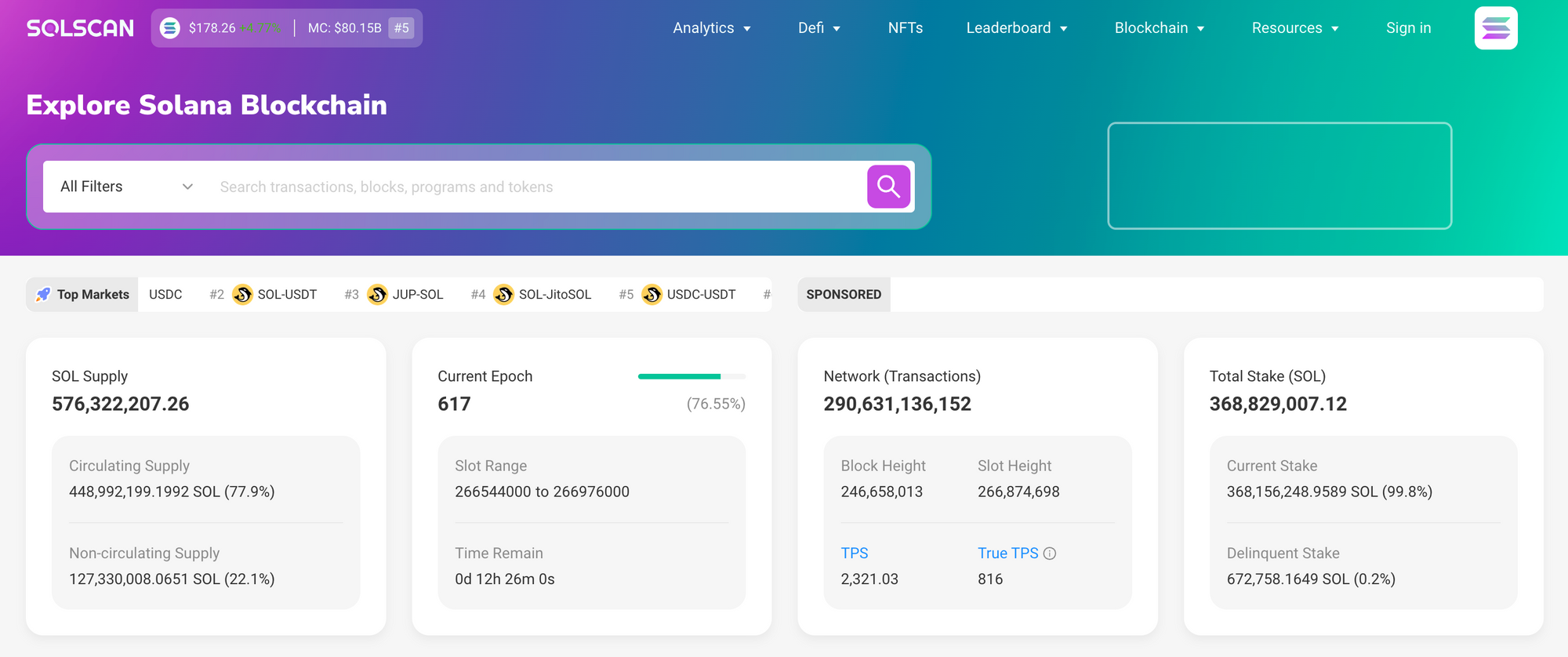
Okay, so check this out—when you’re tracking a token, you want to confirm three things: supply changes, mint authority actions, and major holder movements. A token tracker that lists mints, burns, and large transfers can save you hours. I’m not going to pretend it’s effortless. But one reliable place to start is the official Solscan interface. For quick access, you can use https://sites.google.com/cryptowalletextensionus.com/solscan-explorer-official-site/ which points users to the Solscan explorer resources and tools.
When you open a token page, scan the holders list first. Large single-wallet concentrations raise flags—especially if the token was just minted. Then check the token’s transaction history for mints and burns. Medium-level swaps and market-making strategies often look like a series of small transfers, not one big dump. My experience says: follow the tokens, not the SOL. That little trick saved me when auditing liquidity pools on a lazy Sunday.
Tools matter. Use CSV export for holder snapshots. Use the “Program Logs” panel for failed transactions. If a transaction fails, the logs typically include the program error code and sometimes a human-readable message. But caveat: not all program authors put helpful messages in errors; some just revert. In those cases, you infer from the instruction sequence and account balances. That part is a puzzle—fun if you’re into that kind of thing, infuriating if you’re not.
Transaction fees on Solana are tiny, but they still matter when debugging airdrops or bots. A flood of low-fee transactions can be a bot attack, or just a popular minting event. Context is everything. For example, I once watched an airdrop script repeatedly allocate the same lamports to several ephemeral accounts. At first glance it looked malicious. Later I found it was a badly written script from a legitimate project. So, nuance matters—very very important.
Practical checklist for quick triage:
- Copy the transaction signature and paste it into an explorer.
- Look at the instruction tree — note which program IDs are involved.
- Open pre/post balances for relevant accounts.
- Check inner instructions and token account changes.
- Scan logs for explicit error messages or panic traces.
On the analytical side, sometimes you need to connect the dots across blocks. A single transaction might interact with an orderbook program in block N and settle in N+1 via a different signature. Initially I missed that cross-block dependency, but once I started threading related signatures together, patterns emerged. Actually, wait—let me rephrase that: don’t assume isolation. Transactions are often transactional in intent, but distributed in execution.
Security flag signs: unknown program IDs, recent mint authority transfers, unusual freeze authority actions, or sudden holder concentration shifts. If a token’s mint authority changes hands quickly after launch, that could be a rug or a handoff to a market maker. On the flip side, sometimes teams renounce authority legitimately to build trust. On one hand that can be a good signal; though on the other, renouncing authority doesn’t prevent clever exploits via associated contracts.
For builders: expose clarifying data. Include memos in transactions. Tag your programs. It helps users and reduces suspicious activity flags. I’m old-school and I like readable transaction memos—call me sentimental. That small detail often stops a frantic thread on Discord when a user asks why their swap failed.
FAQ
How do I interpret inner instructions?
Inner instructions are instructions executed by programs called within the top-level instruction. Think of them as subroutines. To interpret them, identify the program IDs, map accounts to token accounts where applicable, and watch pre/post balances. If logs include base64 or binary blobs, focus first on human-readable log lines; they often reveal the reason for failure or the transfer intent.